

In this post, we’re covering everything you need to know about growing, maintaining, and tending to California Pepper Trees.
What Is a California Pepper Tree (Schinus molle)?
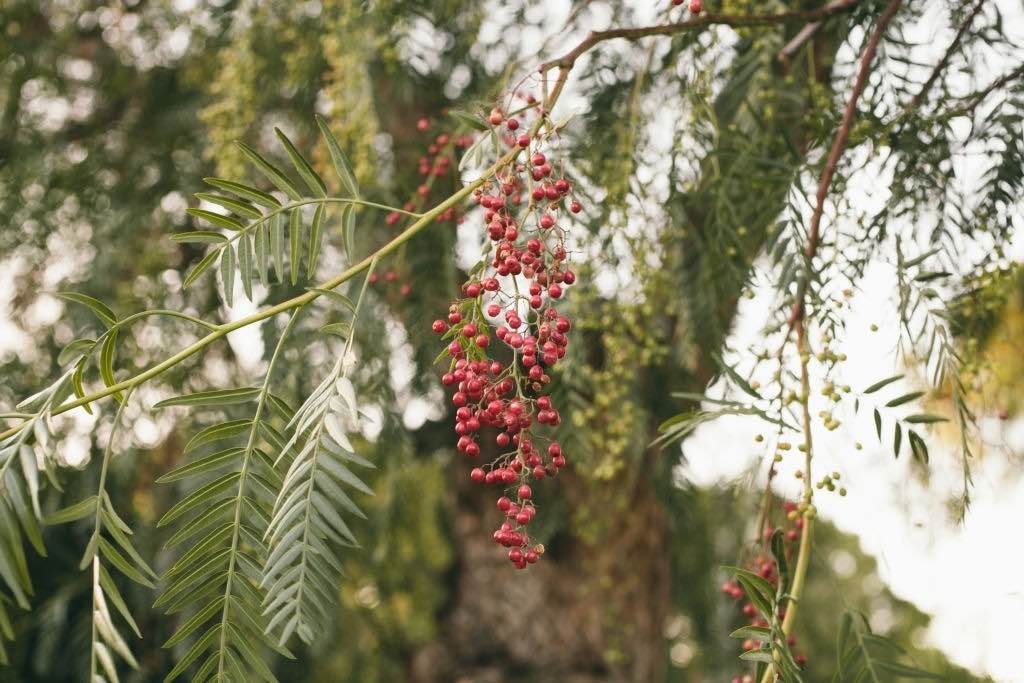
The Schinus Molle, aka the California Pepper Tree, boasts bright pink berries with loose-hanging branches and feathery foliage; it’s a popular choice for many. As a Mediterranean-style tree that’s also quick to grow, it can reach a mature height of around 12 meters tall. Its branches are known to grow as wide as the tree reaches in height.
During the Springtime, whitish-green flowers start to form at the end of the branches. By Fall, they will have transformed into rose-pink-hued berries. When a California Pepper Tree is still in its infancy, it will have a grayish-colored trunk; as they age and mature, the bark of the tree will peel back to show a wonderfully red color of the wood.
Identification: Leaves, Bark & Berries
Being able to properly identify a California Pepper Tree helps you better understand its growth habits, maintenance needs, and potential concerns. While the tree has a distinctive look, breaking down its key features makes identification much easier—especially for homeowners managing mature landscapes.
- Leaves: Long, narrow, and feathery in appearance, the leaves grow in soft, drooping clusters that give the tree its signature weeping look.
- Bark: Younger trees have smooth, gray bark, while mature trees develop peeling bark that reveals a rich reddish tone underneath.
- Berries: Small, rose-pink berries form in clusters and are most visible in fall, adding visual interest but also contributing to seasonal debris.
California Pepper Tree vs Brazilian Pepper Tree: Critical Differences

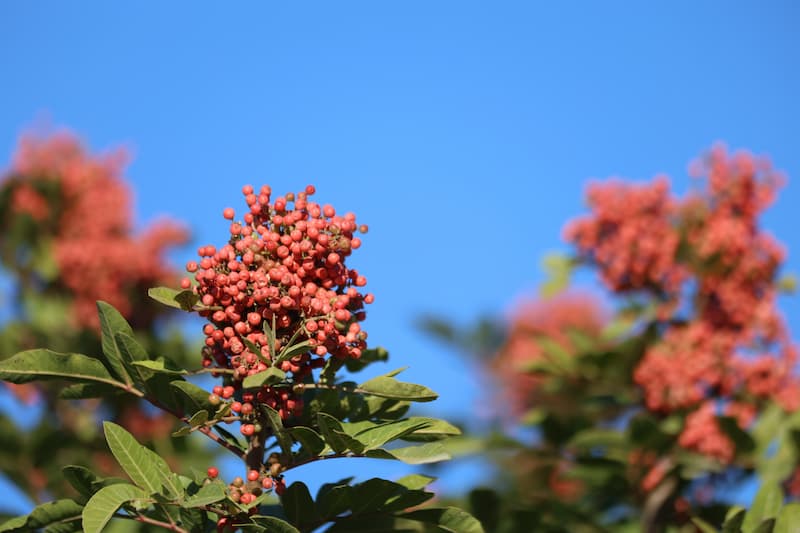
Although they share a similar name, the California Pepper Tree and Brazilian Pepper Tree differ significantly in growth behavior, environmental impact, and maintenance requirements. Understanding these differences is important before planting or managing either species.
Maintenance Needs: Brazilian Pepper Trees often require stricter control or removal, while California Pepper Trees are typically maintained through pruning and monitoring.
Growth Habit: California Pepper Trees have a graceful, weeping canopy, while Brazilian Pepper Trees grow denser and more upright.
Invasiveness: Brazilian Pepper Trees are highly invasive in many regions, aggressively spreading and displacing native plants, whereas California Pepper Trees are less aggressive but still require space.
Leaves & Appearance: California Pepper Tree leaves are longer and more feathery, while Brazilian Pepper Tree leaves are broader and more compact.
Berry Production: Both produce red or pink berries, but Brazilian Pepper Trees tend to produce them more aggressively, increasing spread risk.
Is the California Pepper Tree Edible? Safety Facts
Many homeowners are surprised to learn that parts of the California Pepper Tree are sometimes used in culinary applications. However, it’s important to understand both the benefits and potential risks before consuming anything from the tree.
- The berries are often referred to as “pink peppercorns” and can be dried or roasted for use as a mild spice.
- They have been used in small quantities in cooking, oils, and specialty food products.
- Despite this, the tree belongs to the same family as poison oak, which means some individuals may experience allergic reactions.
- Consuming without proper knowledge or guidance is not recommended, especially for those with sensitivities.
For safety and proper care, it’s always best to consult with a professional before using any part of the tree or making changes to your landscape.
Things to Know About Growing California Pepper Trees
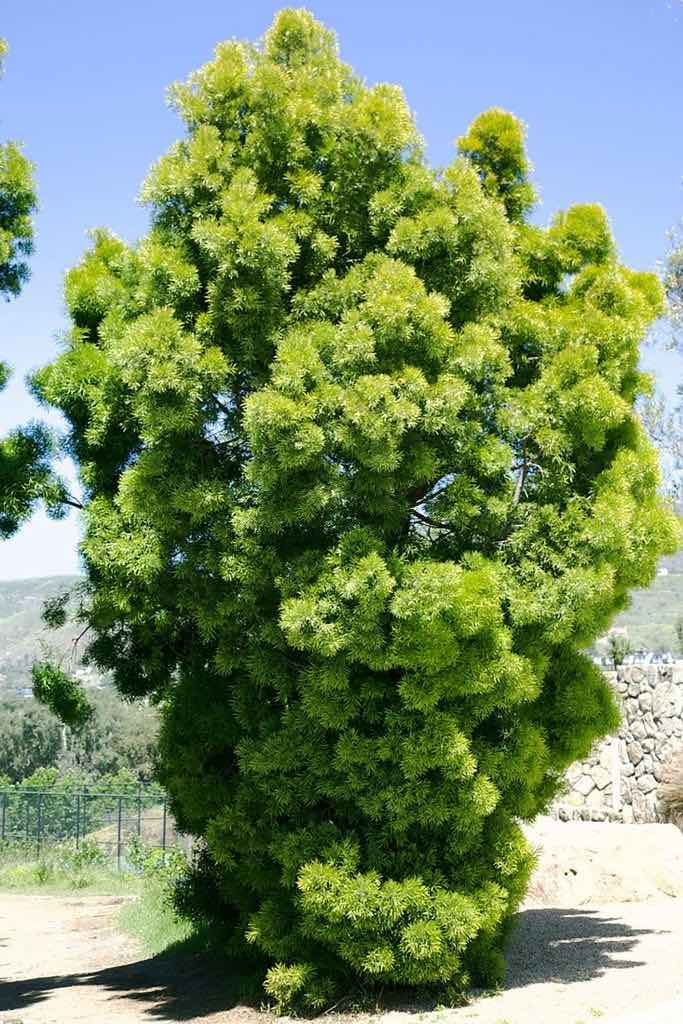
If you’re considering growing a California Pepper Tree, it’s important to ensure you have the right amount of space to allow the tree to spread to its fully-sized self.
Remember, these trees can grow as tall as 40-feet (12 meters).
Well-drained soil is also important, along with finding a spot for it to grow that is in direct sunlight.
If you aren’t able to pick a site with the right conditions and the soil drains poorly, this can significantly increase the amount of care that is required.
It’s not uncommon to see root rot pathogens attacking the tree in such conditions, so it’s important to get things right from the start if you’re serious about growing California Pepper Trees at your property.
Now, you can either grow the tree from a seed or purchase a container tree with a good-strong trunk. The latter is the easiest option. Young trees will need to have their stem tips removed and be regularly pinched to help with growth. Mature trees only require infrequent pruning to help spot any potential issues and improve their overall appearance.
We will cover how to look after and maintain a California Pepper Tree in the next section.
How to Prune a California Pepper Tree: Step-by-Step
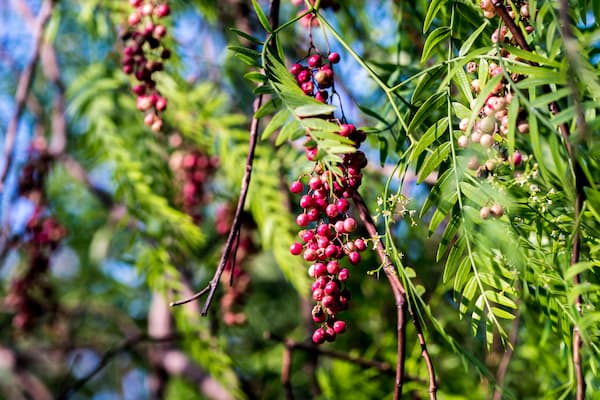
Pruning a California Pepper Tree the right way helps control drooping growth, remove damaged limbs, and support a stronger canopy over time. If you are wondering how to prune a pepper tree, the goal is to improve both appearance and structure without overcutting.
Best Time to Prune (Seasonal Guide)
Winter is typically the best time to prune because the tree is not actively growing, which helps reduce stress and makes the branch structure easier to see.
Step 1: Remove dead, broken, or diseased branches first.
Step 2: Cut back low-hanging or crossing limbs to improve clearance and shape.
Step 3: Thin crowded areas lightly to support airflow and balanced growth.
Tools for Heavy Branch Management
Using the right tools makes pruning safer and cleaner, especially when dealing with mature branches or dense growth near the trunk.
Use hand pruners for small twigs, loppers for medium limbs, and a pruning saw for thicker branches. For larger or elevated limbs, professional equipment may be needed.
Structural Pruning for Wind Resistance
In California landscapes, structural pruning is especially important because heavy canopies and weak branch attachments can become more vulnerable during strong winds.
Focus on removing weak branch unions, excess end weight, and limbs that create an uneven canopy, helping the tree stay more stable and resilient.
California Pepper Tree Maintenance
- Pruning
Pruning a California Pepper Tree is an essential element of maintenance that is required to help keep the tree healthy and looking its best. In order to properly prune this type of tree, you’ll need to ensure that any diseased or dead limbs are cut away, all the way back to the trunk. Younger trees will require a greater frequency of pruning compared to mature trees. Winter is usually the best time of year to prune California Pepper Trees as the tree is not actively growing at this time.
Once a tree matures, you only need to prune them once every winter to try and keep a high canopy. These trees are prone to weeping, and this can lead to the canopy appearing to be quite low on the ground. Another important thing to watch out for is suckers that can sprout out from the base of the tree. If spotted, these should be immediately pruned out as soon as they appear.
If you’re trimming a California Pepper Tree yourself, follow these steps.
- Make sure you trim any dead twigs away at the joint of the tree’s branches.
- Remove any diseased or dead branches, either with loppers or a pruning saw. Be sure to cut the branches right the way back to the sprouting limb.
- If you’re trimming a mature tree, then there’s no harm in cutting back wayward leaves to keep things neat. They have a naturally bushy appearance, so this is normal and expected in order to prevent their droopiness from getting in the way.
At Pacific Landscaping, we can help you keep your gardens and trees in top condition. From regular tree maintenance to annual tree trimming services. Call us today to speak with a member of our friendly team, ask us any questions, arrange a visit, or get a quick quote.
Common California Pepper Tree Problems
With their weepy-like appearance, berries, flowers, and delicate leaflets, they offer dense areas of shade, which can be a real benefit in our climate. However, they aren’t without their issues.
- Debris
California Pepper Trees can produce a lot of debris; when you consider their clusters of flowers and their berries, not to mention the branches that frequently break away, there can be a lot to tidy up after. Female variants produce berries twice annually, and this can result in the need to clear out yards and clean cars regularly.
- Invasive Lists
In some states, California Pepper Trees appear on invasive lists. This means they have a tendency to destroy local habitats by crowding-out the native plants, making it harder for the animals that depend on these habitats for their survival. These listings can, in certain states, mean that it is unlawful to grow or own the plant. The spread of Pepper trees is compounded when small mammals and birds eat the tree’s berries and spread the seeds.
- Toxicity
In some people, the pretty leaflets of the California Pepper Tree have been known to cause allergic skin reactions. The Pepper trees belong to the same family as the Poison Oak, the Anacardiaceous Family. While this is incredibly rare, if you have someone with known sensitivities or who is prone to allergic skin reactions, there could be a better choice of tree for your family home.
- Troublesome Root Systems
The roots of a California Pepper Tree will go anywhere and everywhere in their search for nutrients and water. While this can make the tree naturally drought tolerant, it can also be somewhat problematic. The surface roots of the tree make it virtually impossible for anyone to grow anything underneath the tree. In addition to this, the aggressive nature of the roots can invade drains, sewers and even lead to broken pavements,
California Pepper Tree FAQs
Here are some of the questions we’ve seen being asked about California Pepper Trees.
Can you eat the berries of a California Pepper Tree?
I was looking up the pink pepper and got to know there are TWO types of pink pepper – a) Peruvian pink pepper tree (Schinus molle) are considered safe to eat. B) Brazilian pink pepper tree (Schinus terebinthifolius) berries are generally not considered to be safe for eating.
— 𝐒𝐫𝐢𝐝𝐡𝐚𝐫 (@uxgravy) May 29, 2020
People do eat the berries of the California Pepper Tree.
However, they are usually roasted or dried first.
They have been known to be used as a spice substitute and have also been used to make oils and spice that are used in candy and other baked products.
Why is my pepper tree dropping leaves?
Leaf drop can result from seasonal changes, drought stress, poor drainage, or root disturbance. Check watering habits, soil conditions, and signs of pests or disease to identify the cause early.
Are pepper tree berries poisonous to dogs?
Pepper tree berries are not highly toxic, but they can cause digestive upset in dogs if consumed. It’s best to prevent ingestion and consult a veterinarian if symptoms appear.
How close to plant pepper trees to structures?
Plant pepper trees at least 20–30 feet from structures. Their aggressive root systems can damage foundations, sidewalks, and plumbing, so adequate spacing helps prevent costly structural issues over time.
At Pacific Landscaping, our team of professional tree service experts is here to help you in any way we can. From tree trimming services through to outdoor landscaping, contact us today for an initial chat about how we can help you.